Opening · Act I
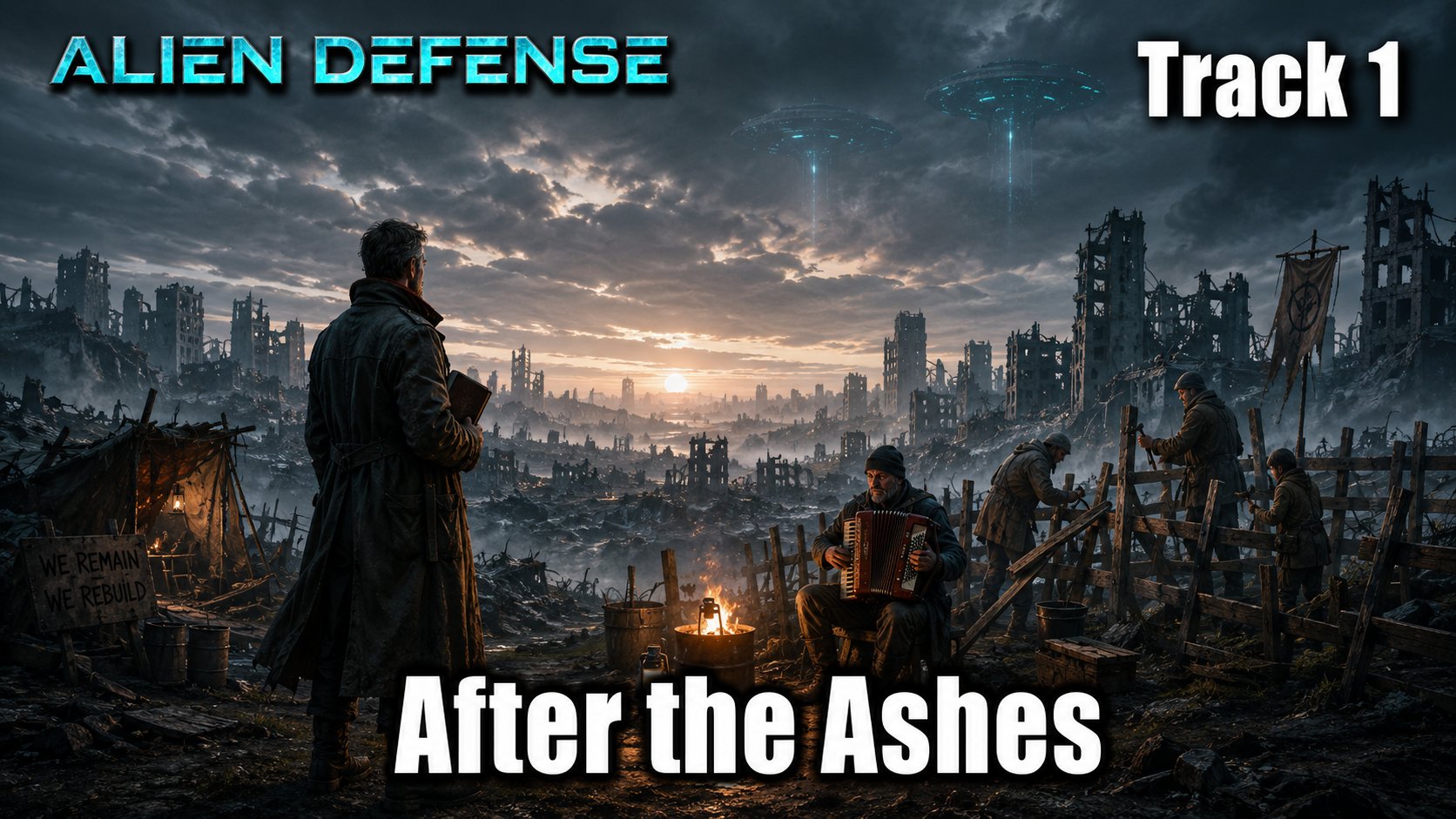
After the Ashes
World War III ends in ruin, and scattered villages begin rebuilding from ash, habit, and memory.
We were not finished after death.
A Folk-Sci-Fi Modern Bard Opera of Collapse, Absurd Warfare, and Fragile Coexistence
After World War III, humanity rebuilds with fences, soup, scrap metal, and solemn accordion. Then alien invaders arrive expecting easy conquest — and discover that reality has made both sides militarily inconvenient.
Alien Defense begins after the collapse of civilization. Villages rebuild from fragments, weapons regress to sticks and stones, and old machines accidentally tell the cosmos that humanity still exists.
The alien invasion is serious. The humor comes from structural incompatibility: advanced weapons barely work on humans, primitive tools barely work on aliens, and both species slowly realize that victory may not be available as a design option.
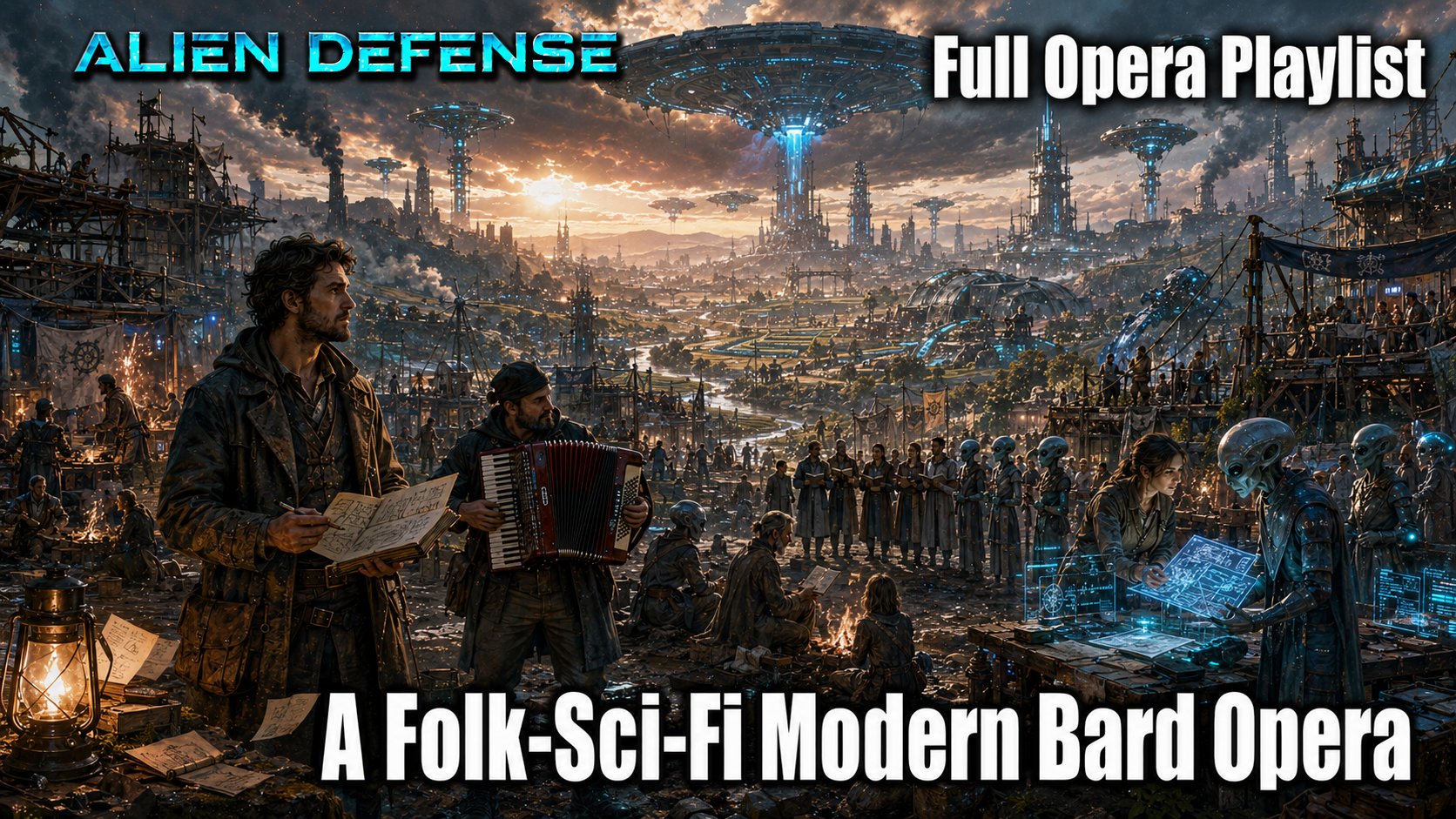
The complete Folk-Sci-Fi Modern Bard Opera — from postwar ashes to a hard-earned coexistence beneath restored skies.
A human engineer and an alien scientist discover that communication scales better than warfare.
Humanity rebuilds while broken systems leak signals into space and invite the uninvited.
Battle doctrines collapse as biology, materials, and pride produce an unwinnable war.
Improvisation, exhaustion, and communication open a path beyond victory and escape.
World War III ends in ruin, and scattered villages begin rebuilding from ash, habit, and memory.
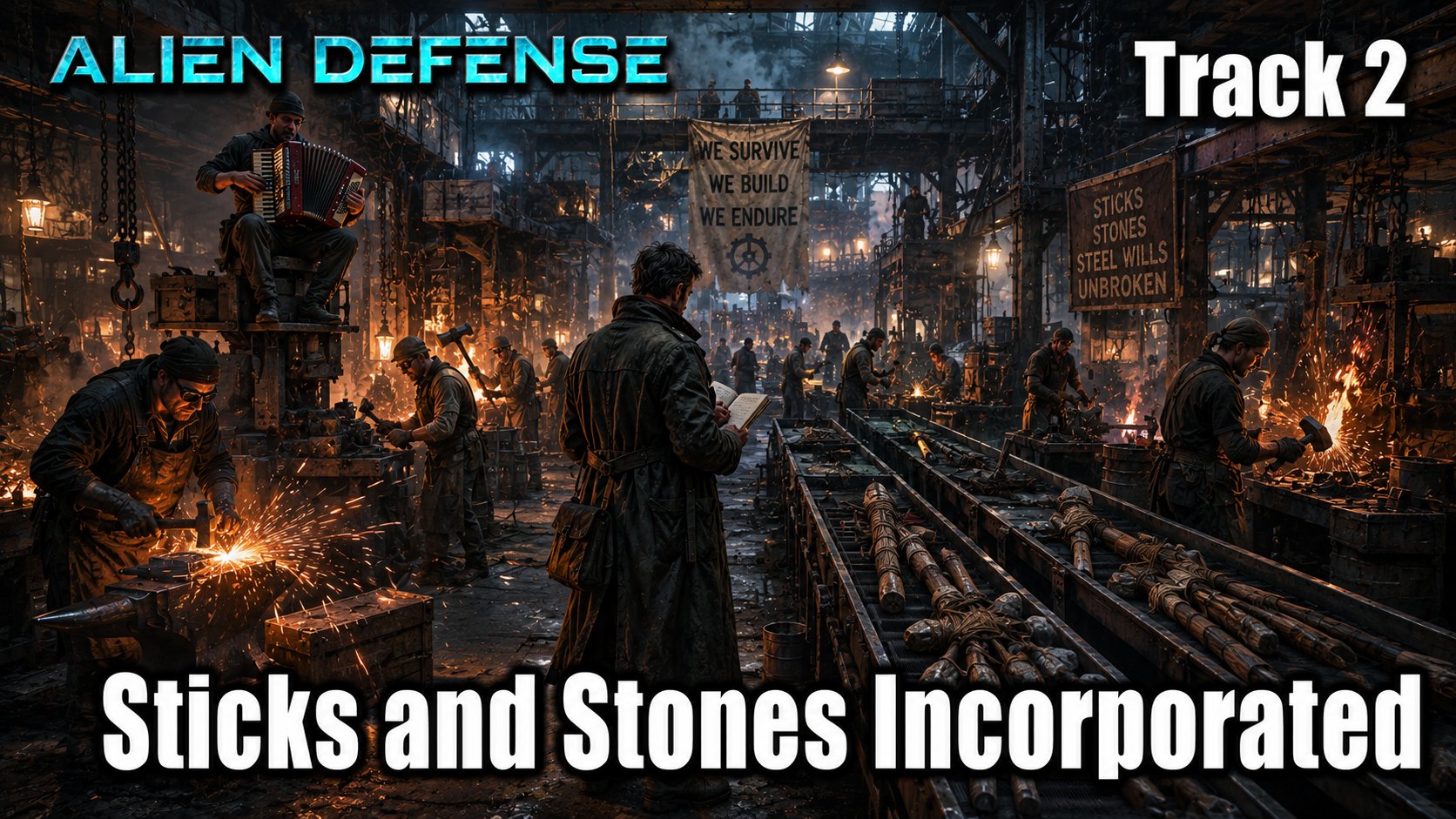
A village organizes a crude weapons factory, mass-producing clubs, slings, sharpened tools, and practical confidence.
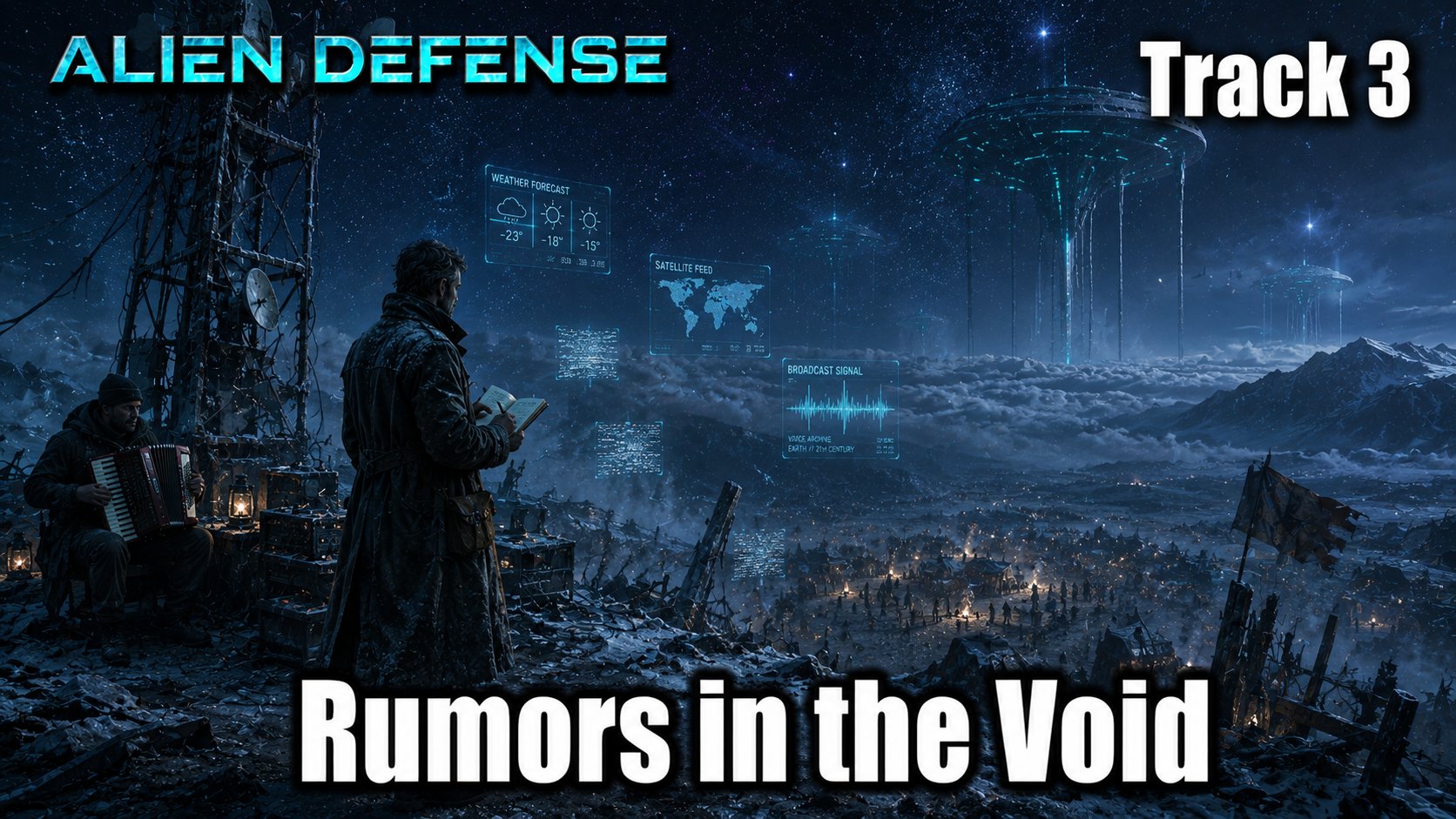
Earth's fractured technology keeps whispering into space long after civilization forgets who is listening.
Alien ships descend expecting easy conquest and interrupt market day instead.
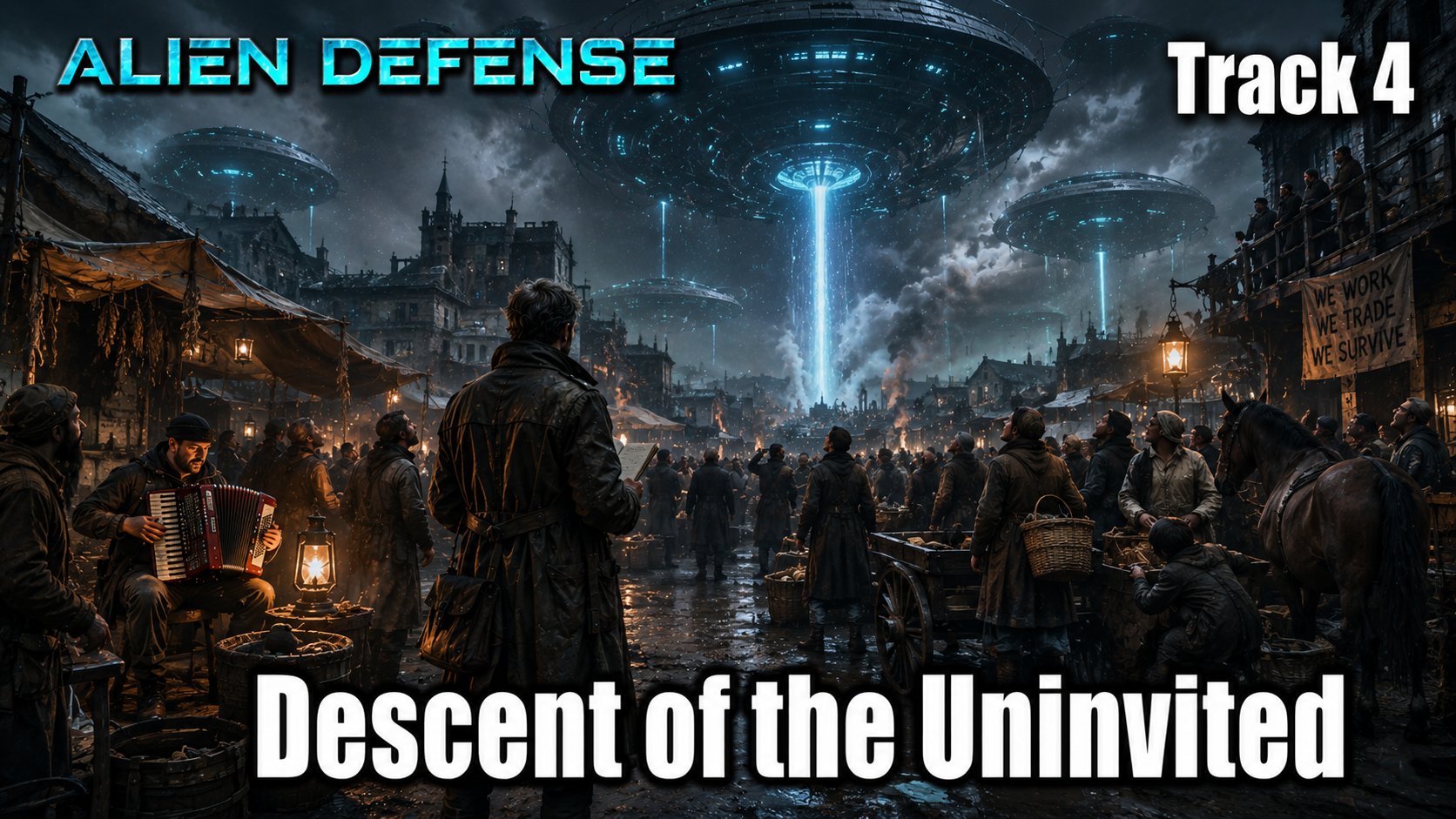
Plasma beams dissipate, stones bounce from armor, and both sides discover they prepared for the wrong bodies.
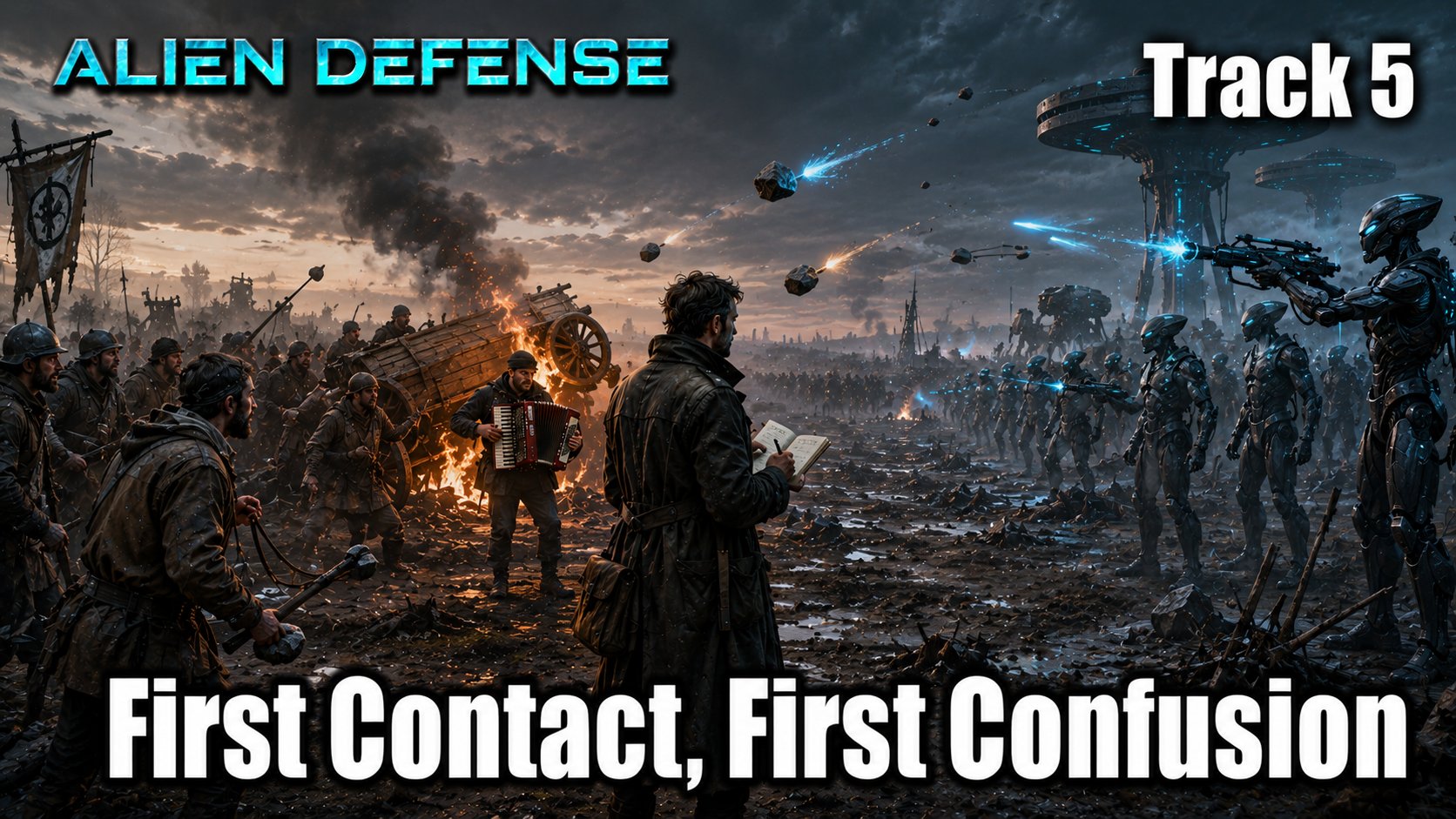
Formations advance, speeches are delivered, and decisive warfare repeatedly refuses to occur.
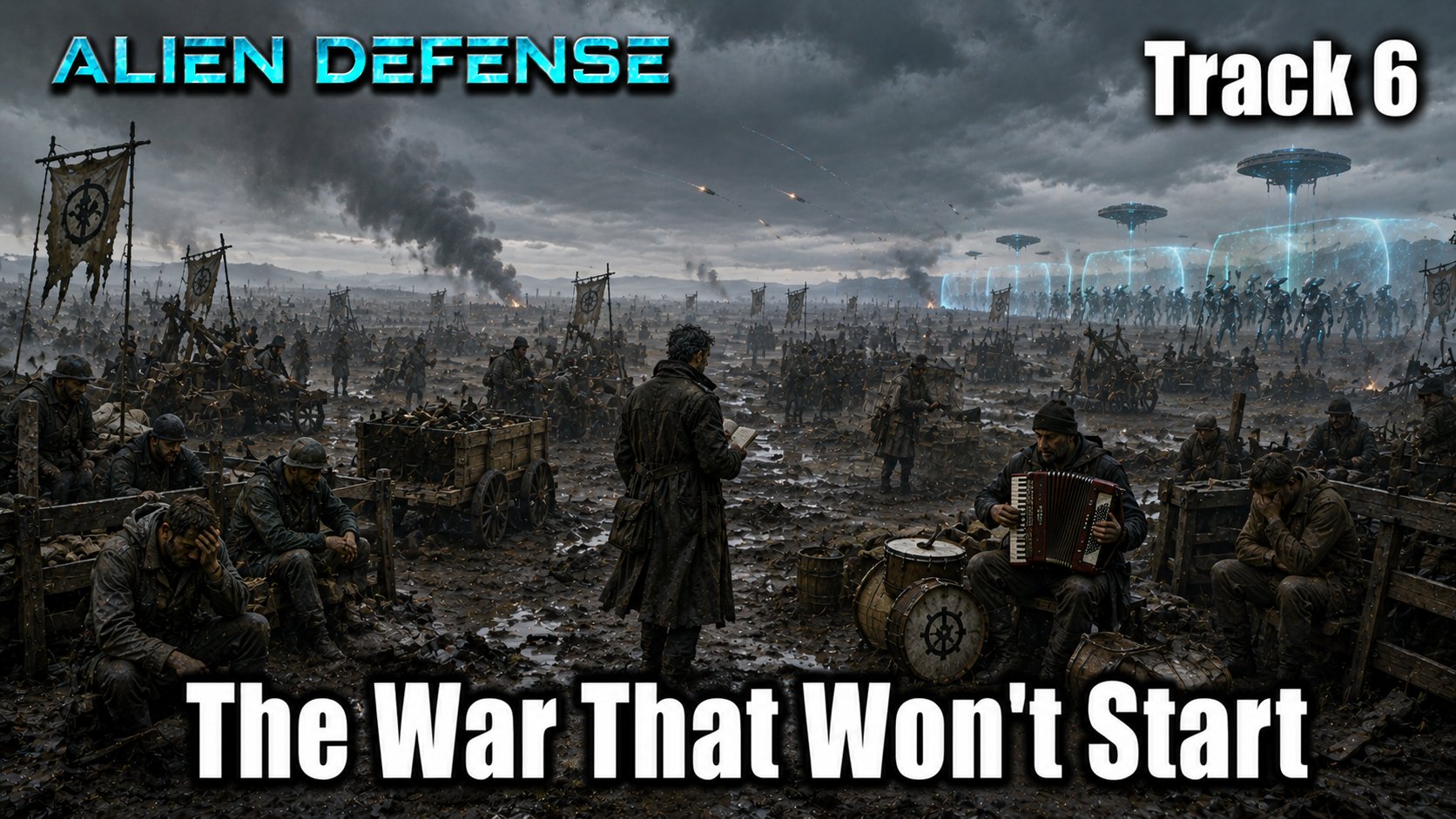
Human settlements overcome rivalry because separate survival has become operationally inefficient.
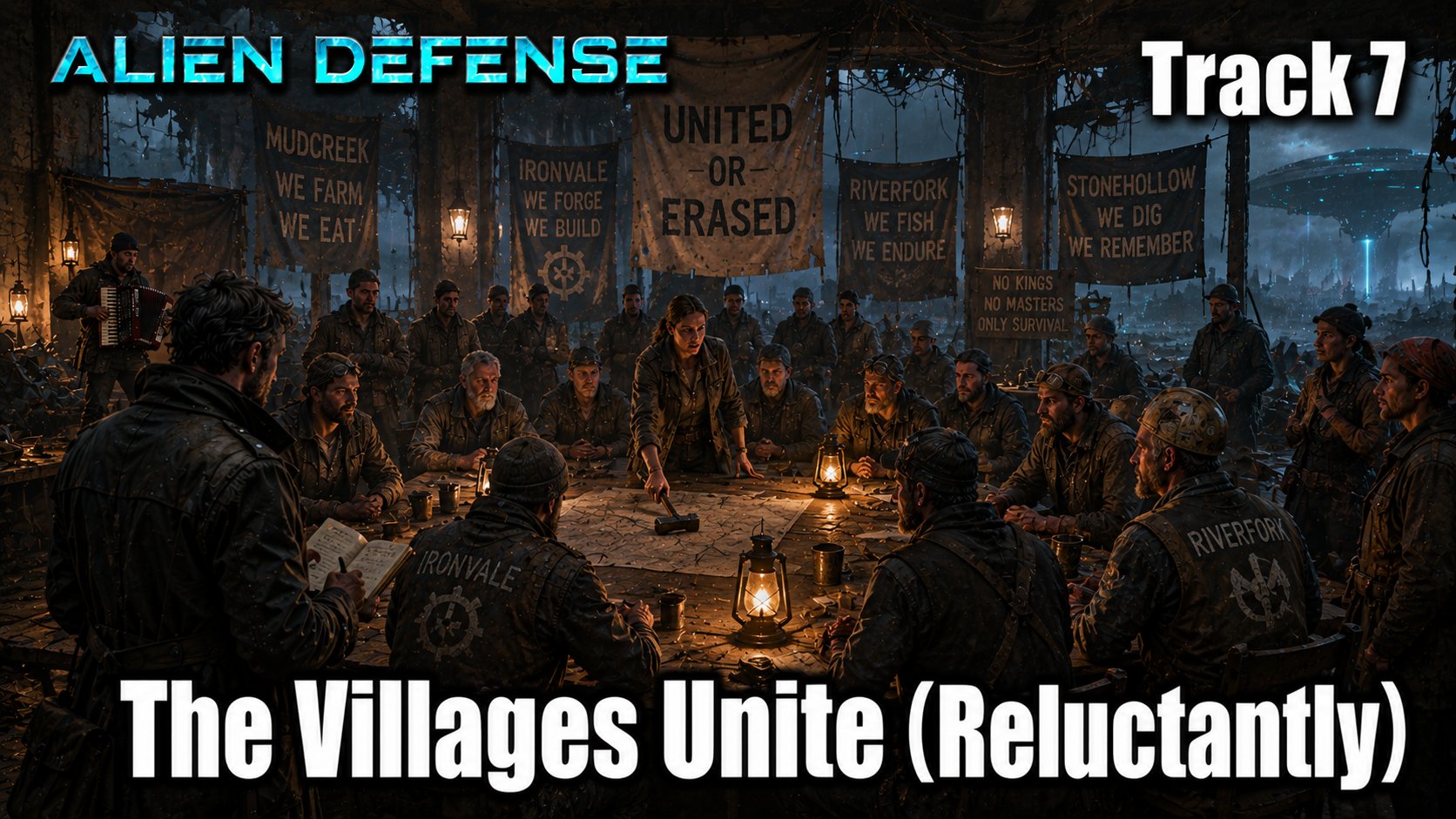
The invaders modify themselves aggressively, creating new weaknesses faster than they solve old ones.
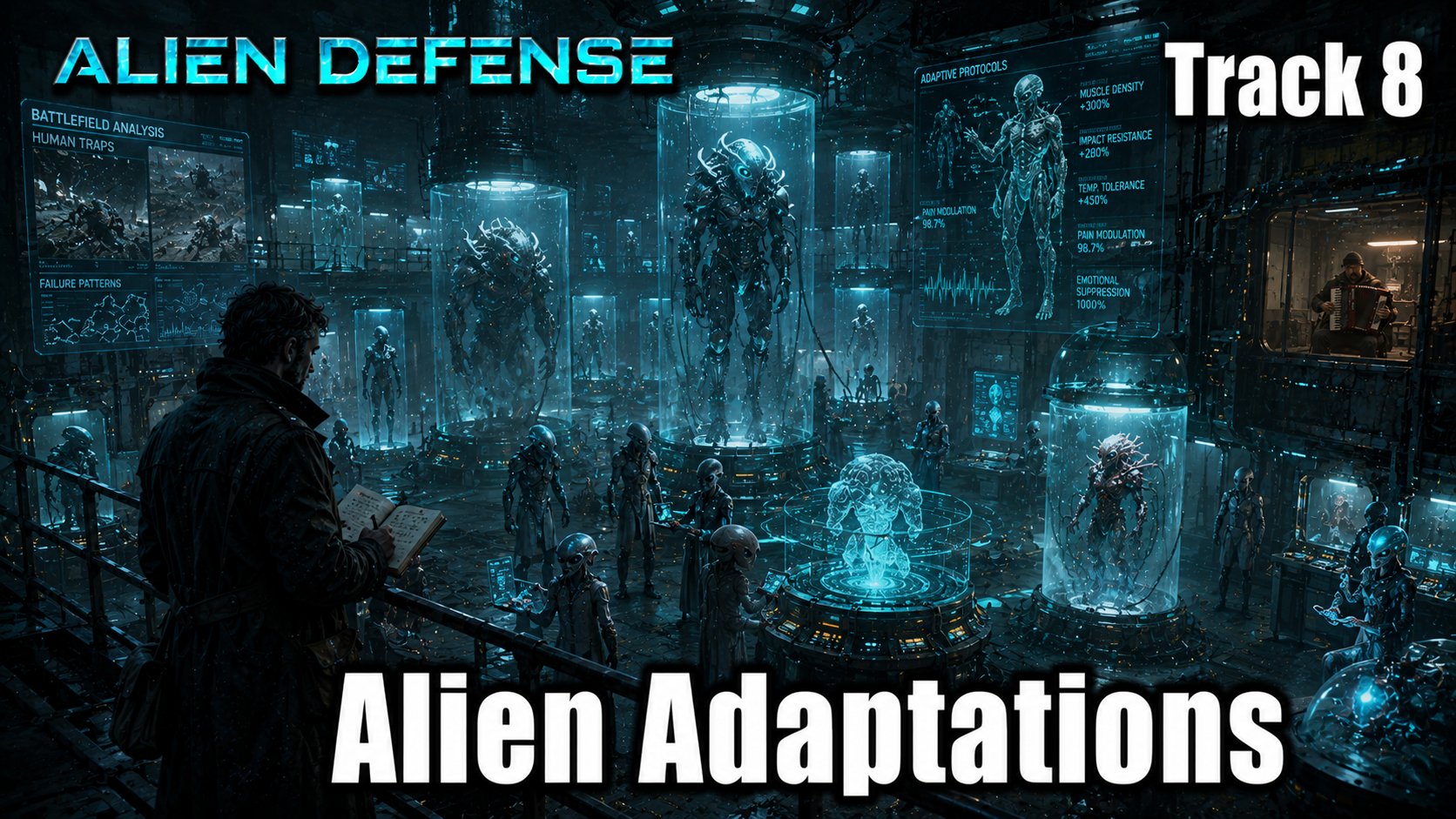
Humans weaponize terrain, gravity, ropes, mirrors, timing, and engineering under severe material limits.
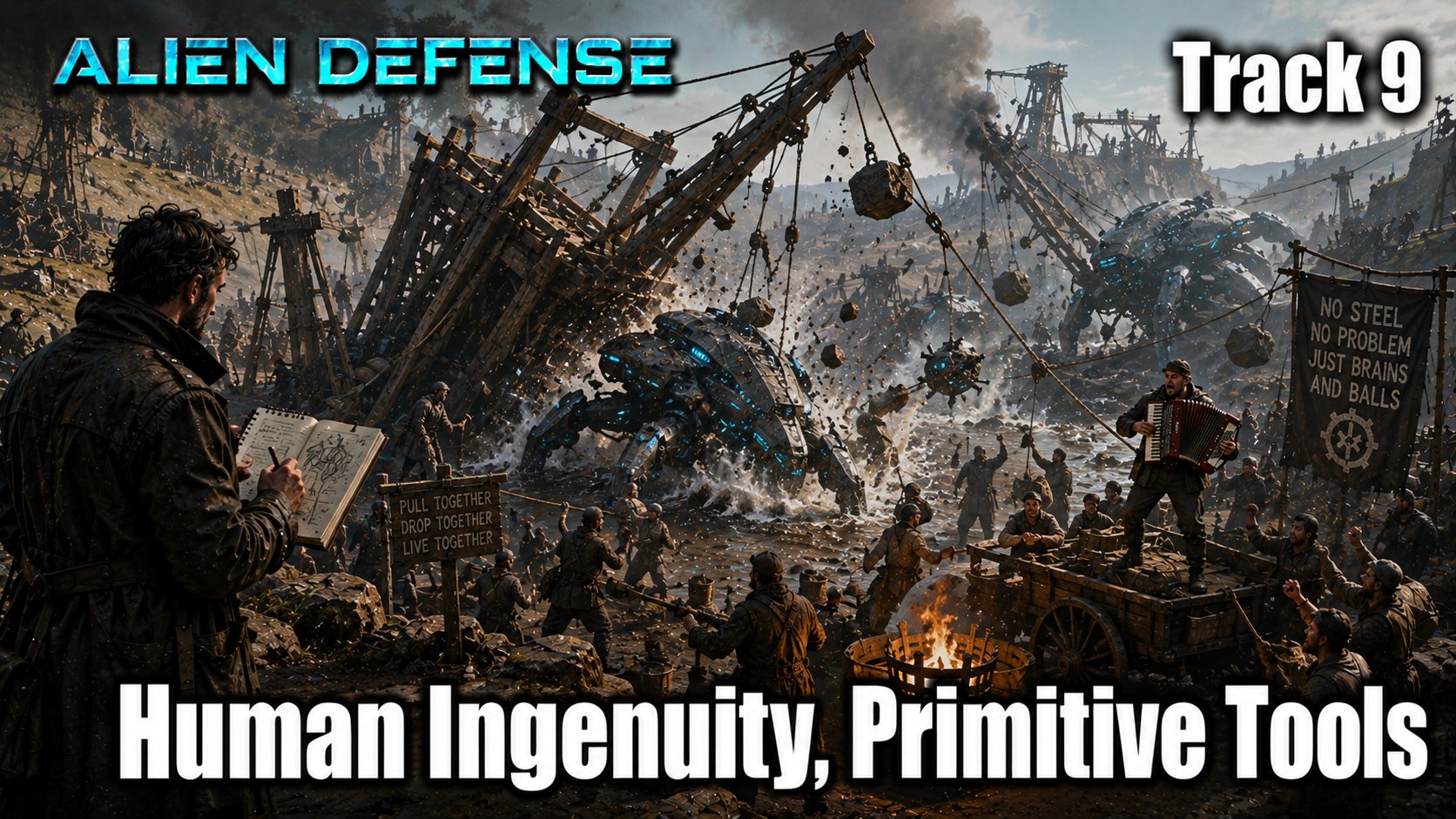
Months pass, war becomes procedure, and both civilizations adapt to permanent absurdity.
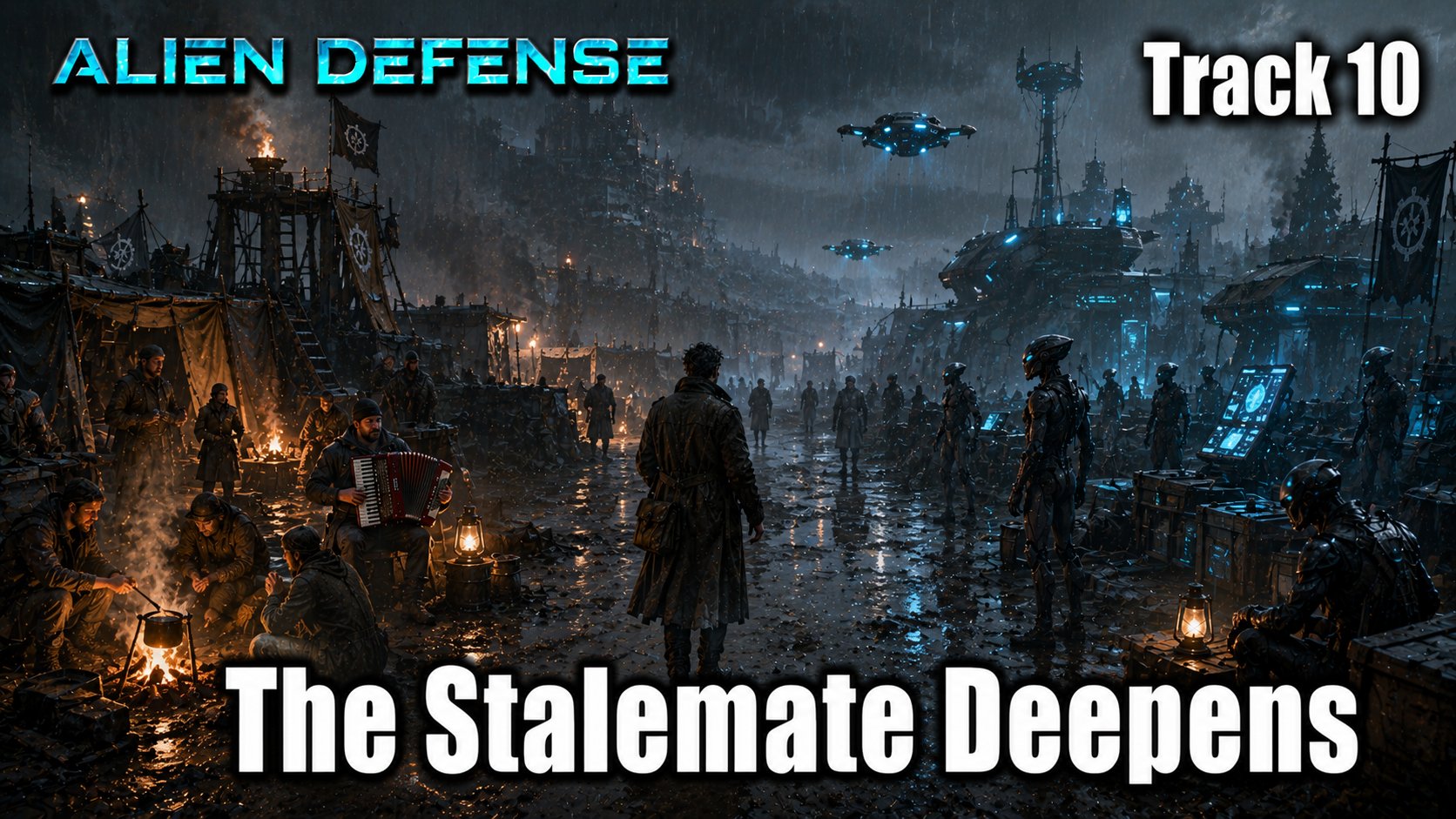
Emma and Arthur begin a hidden exchange of diagrams, warnings, and questions beside ruined machinery.
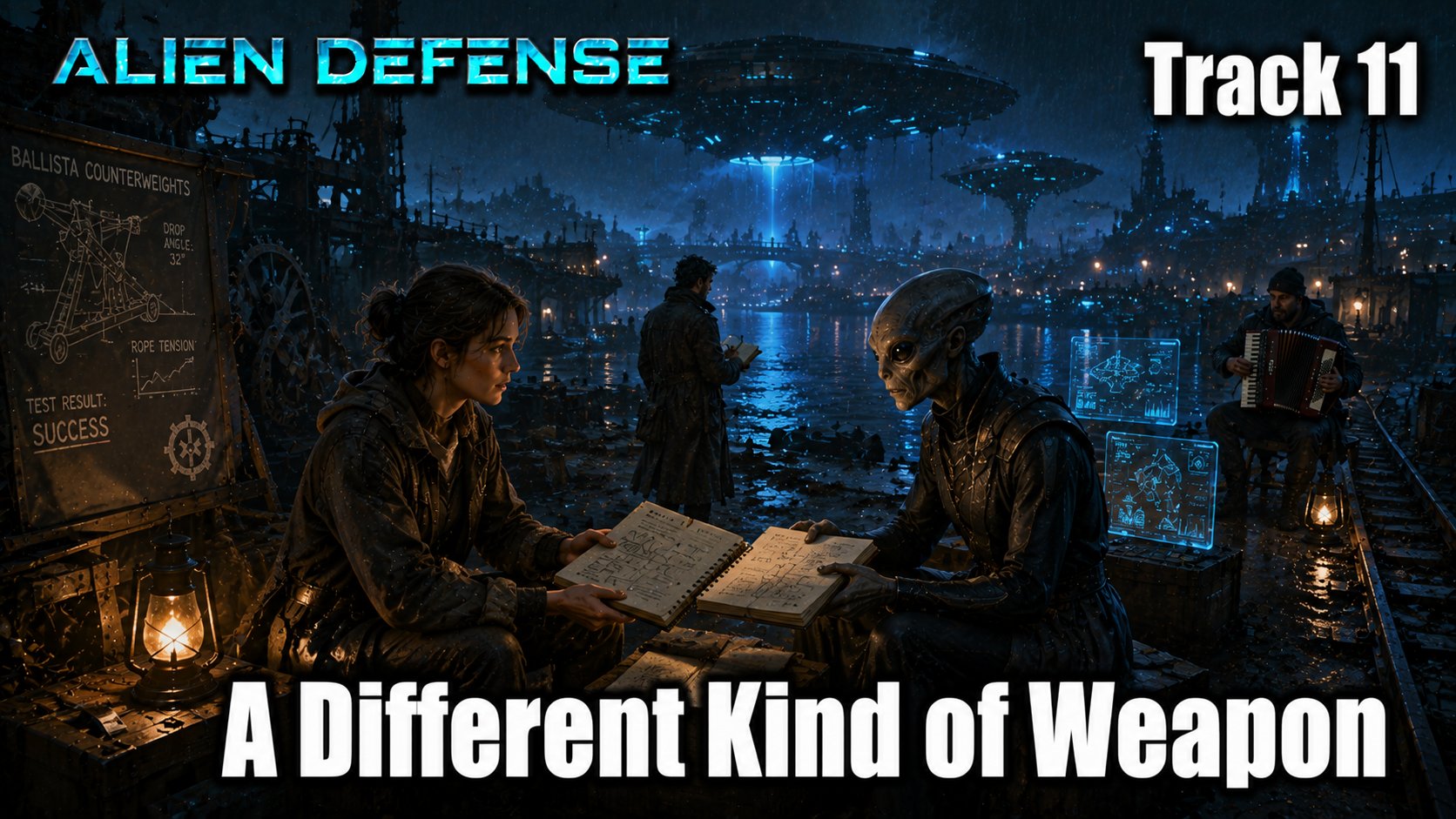
Two civilizations abandon conquest and begin rebuilding a wounded world together.
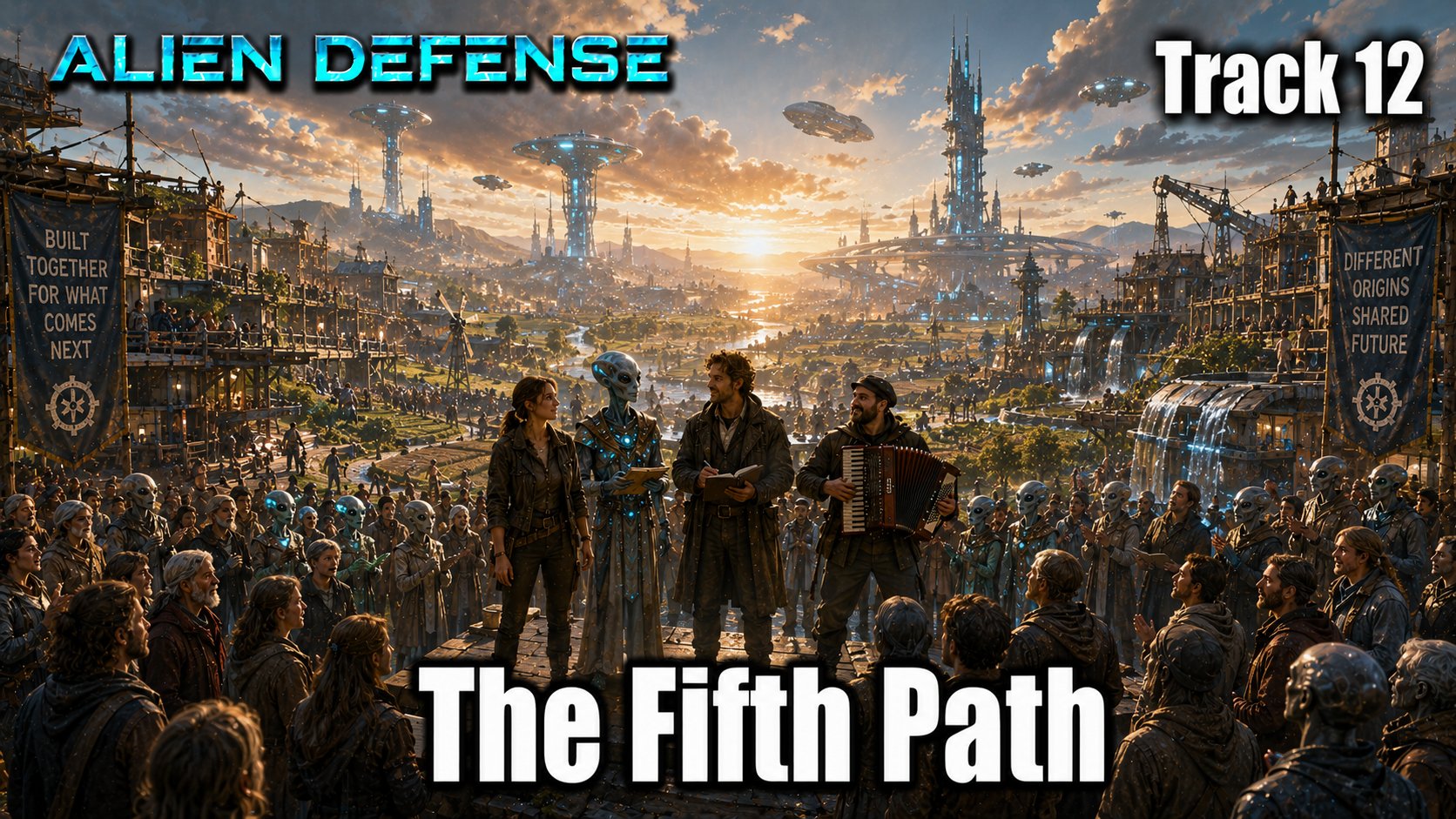
The decisive technology is not a plasma weapon, a sling, or an adaptation chamber. It is the ability of two tired minds to compare diagrams without immediately making things worse.
The ending is not utopia, conquest, surrender, or escape. It is disciplined continuation: roads repaired, rivers cleaned, shields raised, soup shared, and two wounded species learning to remain in the same world.